


Top 7 Ways to Use Wall Panels for Children’s Room Makeovers
For many people, being able to design their bedrooms is one of the exciting parts of having children. Being able to choose the perfect wall finishes and furnishings, deciding on the most functional layout and generally being able to create a restful, comfortable space for your child can be an exciting and rewarding endeavor.
When you are planning a children’s room makeover, traditional paint and wallpaper can create a never-ending job, fighting against inevitable scuffs, sticky fingers and rogue colouring projects. Interior wall panels offer a durable, stylish alternative that works beautifully to protect your walls from the day-to-day impact of having children in the home.
Main things to consider when choosing wall panels for a kids room
Before committing to using wall panels in your children’s bedrooms, there are a few practical things to consider to make sure you create a space that makes sense for your family:
- Durability and maintenance: Children's bedrooms are high-traffic zones that are prone to accidents and mess. Look for materials like high-quality PVC that will not scratch, dent or peel, and provide an easy surface to clean using only warm soapy water and a soft cloth.
- Renter-friendly solutions: If you’re renting, it is recommended to skip the panel adhesive during installation. This way you have a renter-friendly wall finish solution that will protect the walls underneath and only leave you with only a few screw holes to patch up.
- Practical living: If you have a noisy home, either inside or outside the kids’ bedroom, acoustic wall panels should be high on your list of priorities to allow for peace and quiet when it's needed.
- Future versatility: Children grow up fast. Opting for a neutral palette or half-wall, wooden panelling so that you can change the paint above it every few years the room allows the room to grow alongside them without requiring another full renovation in a few years.
The top 7 ways to use wall panels in a children's room renovation
Wall panelling is a practical, versatile and effective way to make children’s room renovations easier, more cost effective and longer-lasting. However, choosing the right kind of wall panelling style, designing it effectively and making the panels work for your family can be tough. Here are some ways that we recommend using wall panels in kids’ bedrooms:
1. Opt for a feature wall
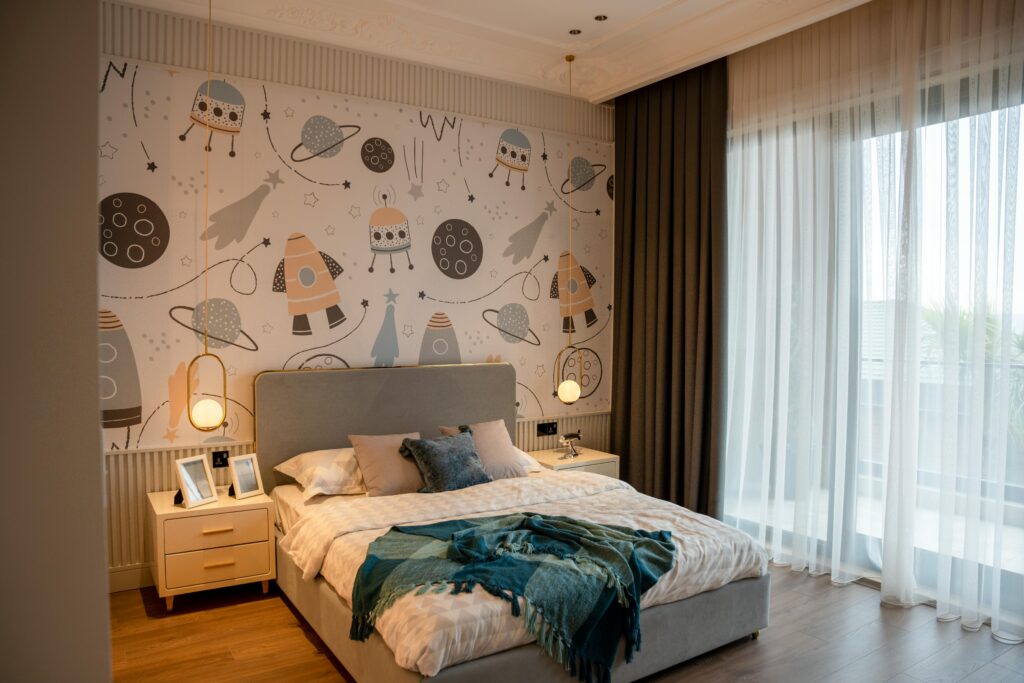
A wall panel feature wall is a creative way to breathe life into a children’s bedroom, without committing to a full makeover. They are a good option for those children whose interests change drastically every couple of years, as they are easy to install and replace. When you opt to panel a single feature wall, it becomes much easier to change things up in the future as you only need to replace one wall of panels.
Focusing on a single wall is also a brilliant way to add depth and intrigue to a bedroom. By applying a distinctive finish behind the bedhead or along a play area, you create an instant focal point that can liven up the space.
2. Install classic half- or dado-wall panelling
For a timeless look that protects the lower half of the walls from toy impacts, try installing panels a portion of the way up the wall. With this kind of solution you can opt for different wall panelling heights that will achieve different visual effects. For instance, choosing dado-height will protect the lower part of the wall from scuffs and dirt, while ensuring the room still feels balanced and spacious.
This traditional approach adds structural interest and allows you to use paint or wallpaper on the top half of the wall where little hands cannot reach. By opting for a neutral, wood-effect like a pure oak slat wall panel, you can continuously refresh the paint above to meet the changing tastes of your young ones without worrying about colours clashing.
3. Use wall panels to zone the bedroom by activity
Wall panels are an effective material to use if you have a bigger children’s bedroom with enough space to zone sections of the room to particular activities. For example, if you are designing a larger space for older kids or teenagers who like gaming, create a dedicated gaming setup. Using dark panelling behind a desk and screen setup frames the gaming zone perfectly, making the technology feel integrated rather than messy.
If the bedroom you’re working with has an awkward recess, treat it like an individual wall. Cladding a small reading corner with textured, slat panels creates a distinct, cosy sanctuary that encourages quiet time. Other alternatives include zoning sleeping areas and play areas very distinctly. This way you can clearly delineate between areas meant for play and excitement, and areas meant for calm, quiet and sleep.
4. Cover the room in acoustic panelling
If your children love playing loud music, gaming with friends or practicing instruments, covering the walls in acoustic panelling is a practical choice for your family. Alternatively, if you have light sleepers or want to create an ultra-quiet space for your children to have downtime, acoustic panelling will also keep outside noises from disturbing them.
These specialised panels feature sound-absorbing technology that dampens noise transfer between rooms. By installing them across the bedroom, you can easily control sound levels in a busy household, ensuring your family can enjoy peace and quiet, regardless of who the noisiest person in the house is.
5. Conceal wardrobes or toy storage with a hidden door
Children's bedrooms can quickly become cluttered with toys, games and clothes. You can use tongue-and-groove panels to clad over flush wardrobe or storage cupboard doors, seamlessly camouflaging the opening into the rest of the bedroom wall. Installing this kind of hidden door is not a hard task and provides many practical benefits to a children’s room.
Disguising a messy toy closet as a continuous wall surface keeps the room looking beautifully organised, clean and spacious, while turning a simple storage space into an exciting secret door feature for your little ones.
6. Introduce sparkle-effect panels for a touch of magic
For younger children who love have a love for space or the ethereal, sparkle-effect panels provide an enchanting, shimmering backdrop without the incredible mess or uneven texture of traditional glitter paint. You could opt to use our Black Sparkle PVC panel on ceilings to create a starry-night effect.
For walls, these smooth, durable surfaces capture natural daylight and evening nightlights beautifully, keeping the bedroom layout feeling highly energetic, bright and imaginative while remaining entirely wipe-clean against sticky fingers.
7. Zone the room for shared bedrooms
For siblings sharing a single bedroom, creating distinct visual boundaries is a good idea to help create harmony in a space that can often feel chaotic. You can use different wall panel styles on opposing sides of the room to give each child a defined personal area that reflects their individual style and age group. Alternatively, constructing a small partition wall clad in tongue-and-groove panels provides physical layout division and acoustic privacy, helping both children feel like they have a space of their own.
Benefits of using wall panels in a children's room makeover
Investing in internal wall panels brings numerous long-term advantages to a busy family home:
- Effortless cleaning: Unlike painted plaster or wallpaper which stains easily, PVC wall panels can be wiped clean in seconds using warm soapy water and a soft cloth to remove grease, dirt, crayon and pen marks.
- Quick DIY installation: The straightforward tongue-and-groove locking system means these panels can be quickly and easily installed over walls, saving you the time, mess and high cost of hiring professional plasterers or decorators.
- Hygienic and mould-resistant: Because they create a tight seal, they prevent damp traps where mould and bacteria thrive, ensuring a completely clean, fresh and hygienic sleeping environment for your children.
- Long-term cost savings: Wall panels act as a highly durable, fit and forget solution that outlasts traditional decorating methods, preventing the need for regular repainting and expensive wall repairs over the years.
FAQs
Can I use wood wall panelling in a kids bedroom?
Yes, you can safely introduce the warmth of timber using realistic wood grain effect PVC panels or acoustic slat panels. Real wood can split, splinter or stain over time when subjected to heavy play, making high-quality PVC alternatives a much more practical choice for a family environment. They deliver the luxury look of natural oak or rich walnut but remain entirely scratch-resistant and wipe-clean, giving you the perfect balance of aesthetic appeal and everyday durability.
Does wall panelling look good in a small bedroom?
Wall panelling works incredibly well in smaller bedrooms. If you choose acoustic slat panels and install them vertically, the continuous vertical lines draw the eye upward, creating the optical illusion of higher ceilings and a more open space. Opting for light, high-gloss whites will also help reflect natural light around the room, making a compact bedroom feel significantly larger, brighter and airier than traditional flat paint would allow.
How to split a room for two kids?
Splitting a shared bedroom is all about creating distinct visual zones. You can install different panel designs on opposing walls to give each child a defined personal area that reflects their individual style. Alternatively, you can construct a central stud wall or divider partition and clad it with tongue and groove panels. This creates a physical, hardwearing barrier that provides acoustic privacy, dampens sound and gives both children their own semi-private layout within a single room.
What is the best way to style a kids bedroom?
The best approach to styling is balancing visual fun with long-term functionality. Use durable wall panels to build a solid foundation on high-impact areas like feature walls or bedheads. Choose timeless finishes like neutral stone textures or classic wood grains that can easily transition from a toddler nursery to a teenager retreat. You can then introduce bright colours, hobbies and personality through easily changeable items like bedding, rugs, toys and lighting.

AS FEATURED IN


