


Combining Wall Panels: How to Mix Finishes
Combining wall panels is a fabulous way to transform a room. Whether you’re a homeowner looking to do a full home renovation, a landlord upgrading your rental or a renter looking for an interior revamp that won’t risk your deposit, combining wall panel finishes allows you to move away from flat, uniform walls and create a space with character that truly reflects your own style.
By pairing contrasting styles like wood and marble effects, you can easily express your own unique aesthetic, while still enjoying the peace of mind that comes from a functional wall finish. In this guide, we outline the benefits of combining wall panel finishes, the best ways to accomplish a cohesive look and some tips on installing wall panels.

Why you should consider combining wall panels
Opting to mix and match different wall panel finishes across your home offers a variety of style and practical benefits:
Versatile designs
One of the biggest benefits of wall panels is the wide range of designs, colours, features and finishes available. This wide range of options allows wall panels to be a more versatile option for those looking to spruce up their home.
When deciding on the best design for your space, there is no right or wrong way to do it. The best method is to let your personal taste guide your project. With such a wide range of options, our DBS wall panels offer a little something for everyone, whether you’re looking for a more natural wood effect, a striking feature wall or a classic neutral grey base.
Practicality
Combining wall panels allows you to position specific materials exactly where they are needed most. For example, you can use highly durable, waterproof PVC panels in high-exposure wet zones like shower enclosures and baths, while utilising decorative wood effects in dry zones to provide a warmer feel.
Cost effective
Achieving a premium aesthetic does not have to come with a heavy price tag. Using high-quality PVC alternatives gives you the look of natural wood, stone or expensive tile without the high cost, specialist tools or intensive maintenance involved in natural materials.
Popular ways to combine wall finishes
If you are looking for inspiration on how to arrange your new wall panels, several design layouts work exceptionally well to bring your space to life. Here are some of the methods we recommend for a cohesive look:
Alternating wet and dry zones
In a busy family bathroom, you can use wide, high-gloss stone-effect panels inside the shower enclosure to create a join-free surface that minimises water entry. Outside the splash zone, you can switch to a textured finish, such as an Oslo Wood look, to bring a sense of warmth and relaxation to the rest of the room.
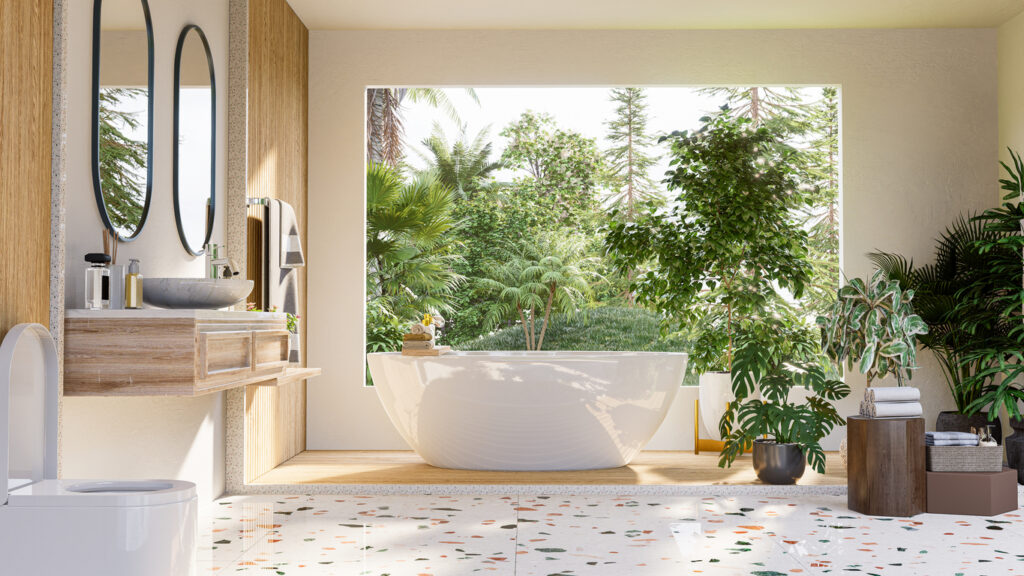
Clashing patterns for modern feature walls
If your personal style is more eclectic, try creating a bold look by pairing distinct, contrasting patterns together. Mixing a striking Terrazzo panel finish with a clean, linear slatted design creates a stunning visual anchor point that works beautifully behind a basin, a freestanding bath or a bed frame.
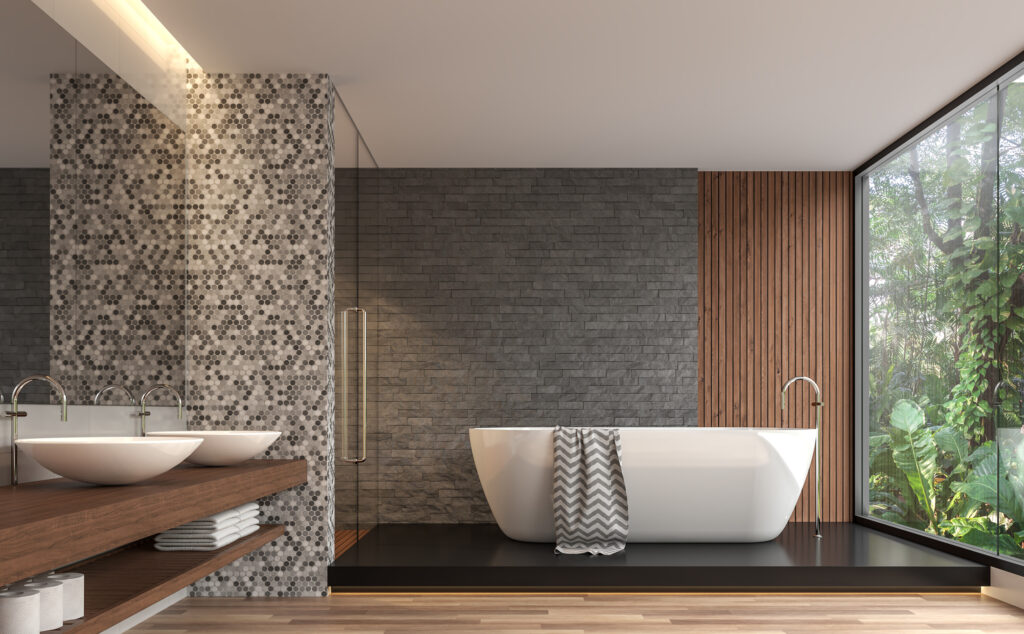
The minimalist industrial combination
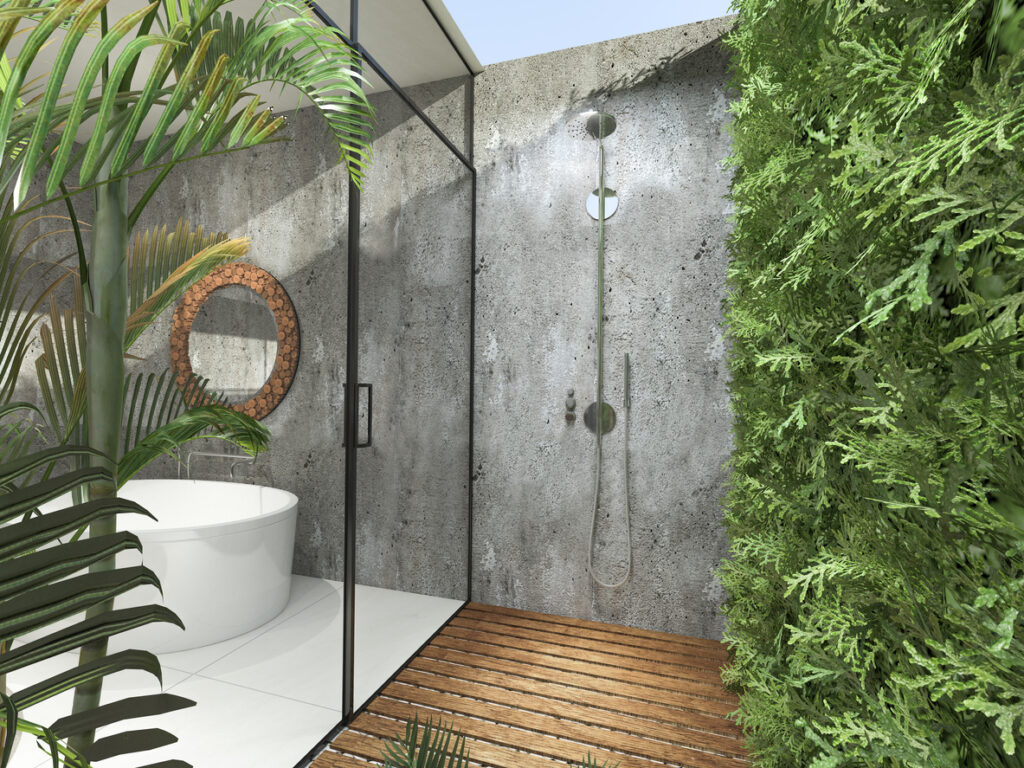
If your style leans toward sleek, contemporary interiors, you can create an industrial look by pairing rougher textures with smooth, minimalist finishes. Try framing a primary feature wall with textured 3D stone effects wall panels to ground the room with an organic, raw element. To keep the space feeling light and balanced, combine this with a clean, light grey or matte concrete finish panel on the remaining walls. This combination works exceptionally well in modern apartments, adding character and tactile warmth while maintaining a clean, clutter-free look.
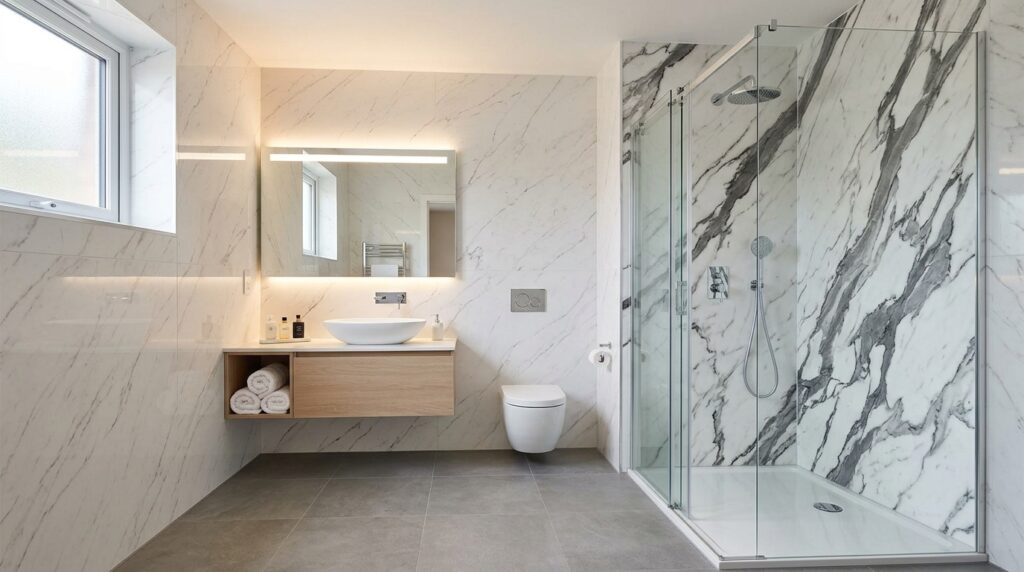
The marble contrast
For a sophisticated twist on the maximalist trend, you can combine two entirely different scales of the same design family to create a high-contrast focal point. Try installing an understated, thin-veined tile effect panel across three walls of the room to keep the space looking open and elegant, then transition to a dramatic, heavy-veined marble effect wall panel finish inside the shower enclosure. By keeping the background colour palette unified in matching whites or greys, the clashing veining styles provide an ultra-modern luxury feel without overwhelming the room.
Simple tips for installing mix-finish wall panels
Planning a successful multi-panel project requires a good amount of preparation to ensure a professional finish.
- Use tape to plan your layout: Before cutting any materials, use masking tape on your walls to mark out panel positions and heights, such as a 1.2m dado line, to help visualise the final look.
- Incorporate transition trims: When combining different wall panel finishes next to one another, use complementary internal trim or external trim to create a clean, watertight and seamless transition.
- Choose the right panel width: For maximum protection in high-exposure areas like showers, choose wider shower panels to eliminate unnecessary joints and keep the area perfectly hygienic.
- Match your bath panelling: To make a small space feel larger and more polished, use the same PVC panels on your bath frame as you have on your walls to create a cohesive, built-in effect.
- Order samples: To ensure the wall panelling finishes you want to use together actually complement each other, it is important to see them together in the space before you commit to them.
Transform your home with DBS Bathrooms
Combining different wall panel finishes is a brilliant way to bring both style and practicality into your next home improvement project. By mixing textures, playing with patterns and choosing the right materials for your wet and dry zones, you can design a beautiful, low-maintenance space that is built to last.
Browse the full collection of wall panels at DBS Bathrooms today to find your ideal combinations.
FAQs
How do I choose the best wall panel finishes?
Choosing your finishes depends entirely on the atmosphere you want to create and the practical needs of the room. To make a small space feel larger and airier, opt for lighter colours in gloss finishes that reflect natural light. For a cosier feel, look for deeper, matte textures like natural dry stone or wood-grains.
Can you mix wall panels with traditional tiles?
Yes, using wall panels in traditional bathrooms is an excellent way to update a bathroom without completing a full rip-out. You can use waterproof PVC panels to cover old tile grout lines in a shower cubicle while keeping original features intact elsewhere.
Are waterproof wall panels long-lasting?
High-quality wall panels are built for long-term durability and are designed to last for years after the initial installation, making them the ideal fit-and-forget solution. Because they are manufactured from impact-resistant PVC, they do not crack, and they feature a user-friendly tongue-and-groove interlocking system for a grout-free finish that reduces the risk of mould.

AS FEATURED IN


