


How to Choose the Perfect Wall Panel Height for Any Room
Wall panels are a versatile option for covering your walls. Their durability and waterproof qualities make them ideal for bathrooms, kitchens and high-traffic areas like hallways and entryways. Thanks to a wide variety of styles and finishes, wall panels can also suit any design preference, be installed in any room and be trimmed to fit any height.
With so many options available, choosing the right wall panel height for your home can feel overwhelming. In this blog, we’ll guide you through the various height options, the factors that influence your decision and our recommendations for specific rooms. By the end, you'll have all the information you need to make the best choice for your space.
Different kinds of panelling heights
Although wall panels can be cut to any height, there are a few standard wall panelling heights:
Full height wall panelling
As the name suggests, this entails covering the full height of your wall with wall panels - floor to ceiling. In standard UK homes, this usually means 2.4m - 2.8m. This height offers a seamless, waterproof finish that creates a cohesive, polished appearance. Vertically installing slat wall panels over the entire length of the wall can draw the eye upward and make a room feel significantly taller.
Half height wall panelling
The average half-height of a wall is about 1.2 meters. Half height wall panelling is a timeless favourite, helping a room feel balanced and classic. Half height panelling is also a good option for high-traffic areas as it protects the bottom half of the wall from scuff marks and damage.

Dado height panelling
Based on a traditional dado rail, which is slightly lower than half-height. Typically, dado height is around 900mm-1000mm. If you’re looking to add some character to smaller spaces, the lower height will do without overwhelming the space.
Regardless of what height you choose, it is important to remember that your skirting height will impact the actual panel height. When measuring your wall to fit wall panels, always take into account the skirting to prevent purchasing panels that are too long.
Factors that can impact your wall panel height
Some factors, such as ceiling height and existing fixtures, will strongly influence the wall panel height you can choose. Other factors, like where you place your furniture and your design preferences, give you more flexibility in your decision.
Ceiling height
The average UK ceiling height is around 2.4m, with low ceilings being below 2.4m and high ceilings being above 2.7m. Naturally, if you’re opting for full-length wall panels, you’ll need to order panels that are the same height as your ceiling. Be sure to take into account skirtings and crown mouldings when measuring the height of your wall.
The majority of our wall panels are manufactured to the average ceiling height, making them perfect for most floor-to-ceiling installations.
Design rules and preferences
There are a few design rules that are applicable when deciding the height of your wall panels. One of them includes the ‘Rule of Thirds’, which is largely considered the golden rule of interior design. According to this rule, your panelling should cover either one-third or two-thirds of the wall height for the most aesthetically pleasing look. Avoid splitting the wall exactly in half, as this can make the room feel squashed.
Personal preference is also a factor that will influence the height of your wall panelling. Different styles use height to achieve very different perceived proportions in a room. For example, if you lean towards a more classical or Georgian style, using the dado height will help you achieve a golden ratio feel and respect the architectural heritage of British homes. For those more partial to modern minimalism and Scandi design, full height panelling creates a seamless feel that draws the eye up and away from any clutter.
Existing fixtures
It is important to consider how wall panelling will interact with existing fixtures like windows, door frames, basins and radiators. Be sure to take into account any of these existing features when deciding on the length of your wall panels.
Furniture placement
This is especially important when you’ve opted for a more eye-catching wall panel design. The last thing you want is to cover up your feature wall panels with a headboard or couch because you didn’t take into account furniture placement.
Room-specific recommendations
Wall panel height can often be dictated by the specific demands of the room itself. Every space in your home serves a different purpose, and wall panelling should ideally work in harmony with those functions. Things like the high-moisture found in bathrooms or the heavy-duty wear and tear of hallways will often guide your hand.
Bathrooms and wet rooms
In a shower or bath area, full-height wall panelling is non-negotiable. This will fully waterproof your walls and ensure no water can damage the structural wall behind the panels.
If you’re only planning to panel ‘dry’ areas of the bathroom - like behind the vanity or toilet - a 1.2m height works well. This height provides waterproof protection for splashback zones, while allowing you the freedom to paint the top half of the wall in a contrasting colour.
Kitchens
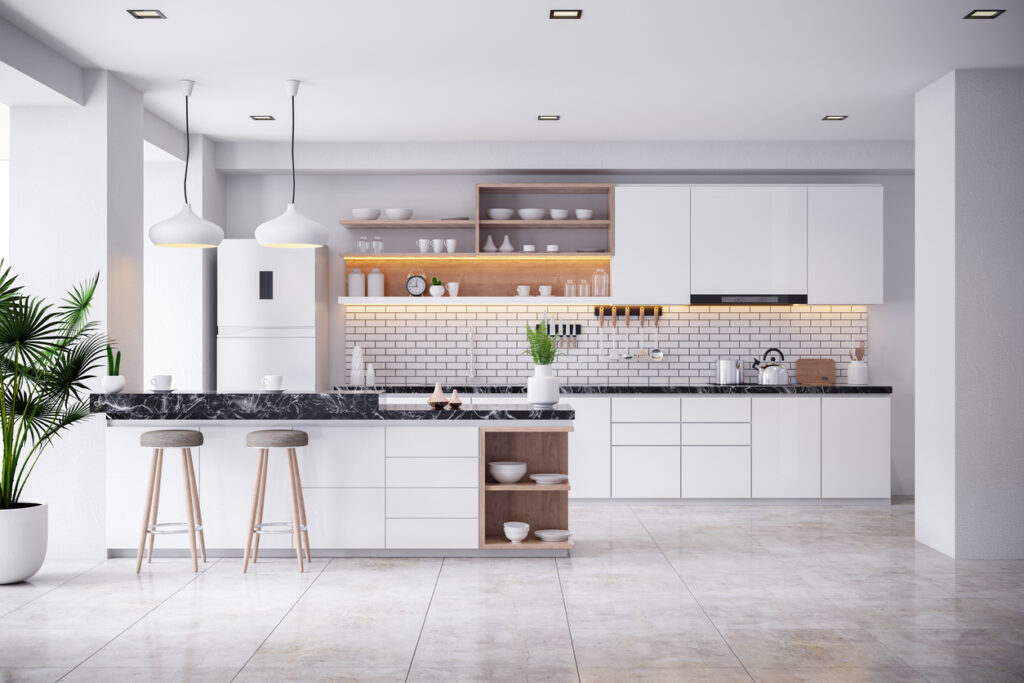
Wall panel height in the kitchen will often be dictated by your worktops. With wall panels being an excellent, grout-free alternative to tiles for kitchen splashbacks, ensuring they’re high enough to serve that purpose is a no-brainer. You can either install them to standard splash back height (60cm above your countertops) or run them from the worktop all the way to the underside of your wall cabinets.
Hallways and staircases
These are both high-traffic zones prone to scuffs from bags and shoes. Gold standard here would be half-height wall panelling, to protect the lower half of the wall. Whether you’ve got children, fur-babies or guests coming in and out frequently, you can rest assured knowing that you can easily wipe the panels clean.
For staircases, be sure to follow the angle of the stairs and maintain a consistent height from the nose of each step.
Bedrooms and living spaces
There is slightly more artistic freedom when it comes to choosing wall panel height for bedrooms and living rooms. This is because you don’t need to worry as much about waterproofing or protecting the walls from scuffs and splashes. However, it is still important to take into consideration furniture placement and existing fixtures.
Given the artistic freedom, you could opt for a striking vertical feature using full-height wall panels to add texture and a sense of grandeur to the room. Alternatively, you could opt for a cosy, boutique hotel feel and use half or dado height to mimic the traditional wall moulding that is favoured in classic British design. Our wood-effect panels are a great option for creating a classic feel while protecting the bottom half of your walls. For something a bit more striking, use 3D-effect panels to create a unique headboard feature wall.
FAQs
How do I panel a room with different sized walls?
Luckily, wall panels are a versatile material, and you can panel different-sized walls with ease. When dealing with uneven walls or different lengths, the key is consistency in height and strategic planning. Our top tips:
- Measure your walls accurately to ensure you order the right amount of wall panels.
- Opt to panel all your walls to a consistent height, unless you’re planning on having a feature wall.
- Finish with appropriate trims to create a sleek, polished finish regardless of wall size.
Can you have panelling in every room?
Absolutely! While we are specialists in bathrooms, the durability and style of our panels make them suitable for almost any space in the home:
- Bathrooms & wet rooms: Our 100% waterproof PVC range is the ideal, grout-free alternative to tiles.
- Kitchens: Perfect for easy-to-clean splashbacks that resist steam and stains.
- Hallways & boot rooms: Tongue-and-groove panels offer a hard-wearing shield against the scuffs of daily life.
- Living areas & bedrooms: Our decorative slat panels add texture and a high-end designer feel.
Does panelling make a room look smaller or bigger?
Panelling is a fantastic design trick to manipulate the perceived proportions of a space. Depending on the wall panel height you choose, you can achieve different results:
- To make a room feel taller: Use full-height vertical panels. The vertical lines of the tongue-and-groove joints draw the eye toward the ceiling, creating an illusion of height.
- To make a room feel wider: Installing panels to half-height or dado height creates a horizontal break that can make narrow rooms, like hallways or small cloakrooms, feel more expansive.
- Light & Colour: Choosing lighter shades, such as white marble or light grey wood effects, reflects more light, making even the smallest bathroom feel bright and airy.

AS FEATURED IN


