


Decluttering your Home: Top Tips and Advice
The mental load of having a home that is bursting at the seams is significant. It can often be compared to the unseen danger of black mould; you might not see it at first, but you can certainly feel its impact. Clutter has a way of slowly creeping into more than just your living space. It fills up your tabletops, cupboards, and bookshelves, eventually cluttering your mind as well.
Knowing how to declutter your home is about more than just tidying up. Read on to learn more about the systems, methods and time commitments involved in decluttering and home organising.
Why declutter?
Before diving into the how of decluttering your home, it is important to understand the why. There are numerous benefits to decluttering your home, including:
- Less stress: A clearer space leads to a clearer mind and fewer moments spent worrying
- Saving time: You can stop wasting precious time constantly looking for lost items
- A healthier home: Reducing clutter helps in reducing dust and allergens
- Easier maintenance: It is much easier to keep a house clean when there is less in it
- Better relationships: There is less shame about having guests over and less strain on those living together
Tips and tricks for decluttering your home
There is a rather endless amount of information out there regarding how to declutter your home, so we’ve compiled a handy list of the top decluttering tips that we think will truly make a difference.
Break it down and start small
If you’re at the point where you’re researching decluttering tips, the clutter in your home has likely begun to feel unmanageable. The biggest mistake people make at this point in the decluttering journey is that they try to tackle all of it at once. The key to a successful declutter is to separate your decluttering into multiple, smaller tasks.
One of the most effective ways to manage the mess is to separate your tasks by category rather than by room. This method, inspired by the KonMari method, ensures you see the true volume of what you own. For example, by deciding to declutter all your clothing at once, you’ll get a better sense of exactly how much you own and how much space you’ll need to pack it away. Other decluttering tips include:
- Start small: Tackle the "small fish" first. An instant, easy win provides the motivation needed to keep going. Again, starting with your clothes can give you a quick and easy win at the beginning.
- Create sub-categories: For larger groups of items, such as books, create smaller sub-categories (cookbooks, novels, coffee table books, etc) to make them manageable.
- Be realistic with time: Avoid starting a four-hour job when you only have two hours to spare on a Sunday afternoon. Creating smaller tasks and sub-categories will help you better budget your time.
Try the Swedish Death Cleaning method: The Swedish Death Cleaning method suggests starting with larger items, gradually moving to smaller ones and finishing with sentimental ones.
Whether you choose to go category by category, drawer by drawer, or by size, the most important rule is: do not try to do it all at once.
Expire the expired items
Kitchens and bathrooms are hotspots for expired products. These items often sit in the back of cupboards for months or even years. Carve out a specific day to say goodbye to anything that is past its best-before date. This is a quick win for anyone looking for home organising inspiration, as it instantly clears space without much emotional effort.
Make a decision and feel confident in it
When you pick up an item, you need to decide its fate immediately. Are you keeping it? Then keep it with confidence. If you are getting rid of it, do so without a second thought.
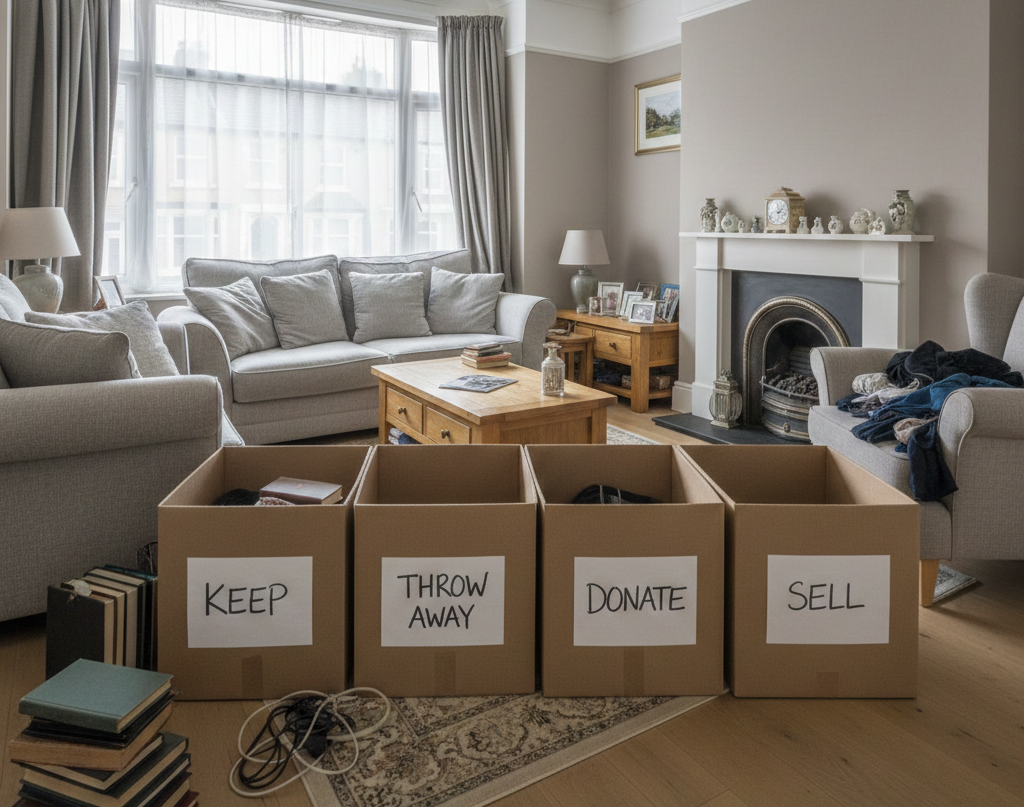
To make this easier, try the Four Box Method:
- Keep: Items you use and love
- Throw away: Items that are broken or beyond use
- Donate: Items in good condition that could be useful to someone else
- Sell: Items with value that you are happy to part with
With this method, it is key to have a realistic plan for the 'donate' and 'sell' boxes. Otherwise, they may simply become new clutter that lives in your attic for another three years. To avoid this, figure out a low-effort plan to get rid of both the donate and sell boxes before you get started.
Extreme methods for a fresh start
Got decision fatigue but desperately need a fresh start? Consider these minimalist methods when decluttering your home:
The Packing Party
Pack everything you own into boxes as if you were moving house. Only unpack things as you have an immediate use for them. If something is still in a box after three weeks, it is likely not necessary for your day-to-day life. Beware of getting rid of seasonal items or important paperwork when employing this method,
The 30-Day Box
For a less extreme version, take all your "junk" - like those mystery cables and trinkets in your kitchen drawers - and put them in a box for 30 days. If you didn't reach for or miss anything in that time, it's time to say goodbye. This is one of the most practical decluttering tips for those "just in case" items.
Use your space effectively
It is vital to remember that decluttering and home organising are two different things. You must always begin with decluttering. This gives you the physical space needed to find a proper "home" for the items you choose to keep.
You can also make decisions about where and how to store certain things using these tips:
- Use bigger, deeper storage spaces for big items and keep smaller trinkets or items confined to smaller spaces
- Fold clothing effectively to maximise drawer space
- Make use of wall storage where possible to ensure surfaces stay decluttered. Our PVC wall panels are a great option if you’re looking to easily hang storage units or shelves in your home.

Have a system to keep things decluttered
Once you have learned how to declutter your home, you need a system to keep it that way.
- Understand your habits: If you struggle to put laundry away, get a dedicated basket for clean clothes instead of letting them pile up.
- The 'Closing Shift': Implement a realistic tidying routine at the end of each day.
- Intuitive placement: Place items where you actually use them. If you use your hairdryer every day, don't store it at the back of a deep drawer.
- One in, one out: Commit to removing one item every time you buy something new. If you buy a new t-shirt, donate one you haven't worn in six months.
This "one in, one out" method is a fantastic way to refrain from buying new things unnecessarily. Before a purchase, ask yourself: "Is there a pair of shoes I am willing to give up if I buy these ones now?".
Final thoughts
The process of decluttering your home will often get worse before it gets better. However, there is no right or wrong way to do it. Whether you prefer the one step at a time approach or a full packing party, finding a method that suits your lifestyle will yield the best results.
FAQs
How do I start decluttering my home?
The best way to start is by breaking the process down into multiple, smaller tasks rather than attempting to tackle the entire house at once. To begin effectively, you should:
- Start small: Focus on a "small fish" task first to gain an easy win and build momentum
- Organise by category: Instead of going room by room, declutter by category (such as all clothing or all books) to understand the true volume of what you own
- Budget your time: Be realistic about how much time you have; avoid starting a long task if you only have an hour or two
- Clear expired items: Begin with expired items in kitchens and bathrooms by disposing of products past their best-before dates for an instant, low-effort win.
What should I remove first when decluttering?
When deciding what to remove, start with items that require the least emotional effort to help you build confidence in your decision-making. A quick and easy first step is to go through your kitchen and bathroom, clearing out any expired items.
What is the best way to organise your home?
Effective home organising is a separate process that must always follow a thorough declutter. Once you have cleared physical space, you can organise your belongings using these methods:
- Intuitive placement: Store items exactly where you use them. For instance, keep your most used items in easy-to-reach spots
- Strategic storage: Use deep spaces for large items and small spaces for smaller trinkets
- Wall storage: Utilise vertical space with shelves or units to keep floor and table surfaces clear
- Maintenance systems: Implement a "one in, one out" rule where you remove an old item whenever you buy something new to prevent future clutter.

AS FEATURED IN


