


How To Remove And Prevent Bathroom Ceiling Mould
Mould is unfortunately very common in bathrooms, as the wet and humid conditions of a bathroom are the perfect environment for mould growth. A mouldy bathroom doesn’t only look bad, though, as it can also be bad for your health.
Condensation is the most common reason for mould build-up in bathrooms. This is because steamy showers and long soaks in the tub make for a lot of warm, damp air that hangs about. As this steam leaves the shower or bath, it hits the cold ceiling and walls, creating condensation droplets on surfaces that leave them damp. This dampness will eventually seep into the plaster of the ceiling and walls, which leads to the production to mould spores. Condensation can feel like an evitability, but there are effective ways to get rid of condensation. However, if your attempts at bathroom waterproofing have been unsuccessful, then the area over the shower or bath is the most likely area to be affected.
Whilst our ceiling panels can help prevent ceiling mould, if you already have mould on your bathroom ceiling, we have outlined the best ways to remove the mould and how to prevent it from coming back, without incurring much, if any, bathroom renovation costs.
How to remove mould from ceilings
If you already have mould on your bathroom ceiling, you can’t do anything about preventing further mould before cleaning what’s already there. The best way to remove mould from bathroom ceilings is to use a simple solution of warm water with detergent or a homemade cleaning solution of diluted bleach or white vinegar.
Before you start cleaning the area, be sure to wear a protective mask and gloves so that you don’t touch or inhale the mould spores. This is because mould spores can be dangerous to come into contact with. Wash the area with mild detergent and warm water and then let the area dry.
If you’re using diluted bleach or white vinegar to get rid of the mould, the process is a little different. To use the bleach solution, mix one-part bleach to one-part water and apply the solution with a cloth. To use vinegar, pour it into a spray bottle and spray it directly onto the mould. Leave it for an hour or so, and then wipe the area clean with water and wait for it to dry.
Prevent bathroom ceiling mould returning
Quick-fixes
If your aim is to avoid costly and time-intensive projects while also doing what you can to prevent mould in your home, here are a couple of quick-fixes we can recommend:
- Reduce the production of moist air
By adjusting the way you do certain things, you can minimise the amount of warm air that is released into your home. By taking cooler showers, placing lids on pots and pans while you're cooking, drying your laundry outside, and avoiding the use of portable gas heaters, you are able to curb the amount of moisture in the air within your home. - Isolate and remove moist air quickly
When you are doing things that create moisture and condensation, be sure to keep doors closed to prevent the spread of moist air. For example, you can isolate the steam and condensation caused by a shower by closing the bathroom door whilst you're in there. Furthermore, it is a good idea to ventilate the area as much as possible by keeping windows open or making use of extractor fans.
Add in ventilation
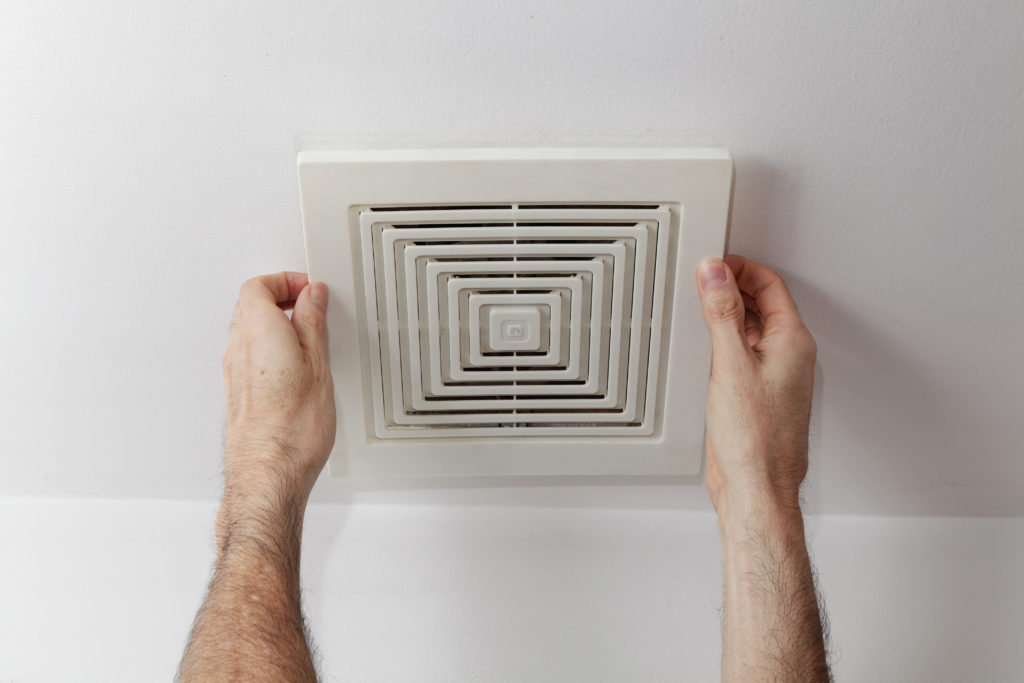
Ventilation can be a major problem in bathrooms, especially ones without windows, but installing a ventilation fan can often reduce mould and mildew build up in the bathroom. Most bathrooms will now have an extractor fan that removes warm and moist air from the room, but if this isn’t an option for you, you can increase ventilation in your bathroom by opening windows and doors. We have a more detailed blog that explores how to effectively ventilate your bathroom to avoid damp and mould if you're looking for more tips.
Ventilation fans will remove odours and other contaminants whilst maintaining excellent air quality, and as a result – minimising the growth of bacteria.

Anti-mould paint
Anti-mould paint is a specially formulated type of wall and ceiling paint that prevents mould from building up, even in areas with lots of condensation and air humidity. It can be a great first solution to stop mould returning once you’ve cleaned it away, creating a surface that repels condensation. Different brands of anti-mould paint offer varying levels of protection, but generally they’ll last for around 5-6 years.
However, anti-mould paint isn’t waterproof so you can still end up with water damage to your ceiling if it gets very wet consistently.
Heating and insulation
As mentioned, condensation occurs when warm, wet air comes into contact with cold surfaces. So an effective way to prevent mould in your home is to ensure that it is well insulated and has adequate heating. Effectively insulating your home reduces the number of cold surfaces where condensation can form, which minimises the risk of mould. Furthermore, using your heating regularly when it's colder outside can reduce the chance of mould production for the same reason.
Use ceiling cladding
Ceiling cladding is a great way to prevent mould from occurring on your bathroom ceiling (just as wall cladding, like our tile effect wall panels, is a great way to prevent mould from occurring on walls). Unlike a plastered ceiling that can absorb steam, PVC cladding won’t absorb steam, and therefore won’t get mouldy.
You can also use bathroom ceiling cladding over anti-mould paint for twice the level of protection. By combining both methods of mould prevention, you’ll be making your ceiling extra resistant to mould build-up by protecting it from getting wet.

AS FEATURED IN


